Small and medium enterprises (SMEs) are the backbone of India’s economy, driving employment, innovation, and local growth. But despite their economic importance, one of the biggest obstacles SMEs face is access to formal credit. Traditional banking processes demand extensive paperwork, multiple branch visits, and long verification cycles. Many businesses – especially micro and rural enterprises – simply don’t have the time, staff, or documentation systems needed to meet these requirements.
The Account Aggregator (AA) framework, introduced by the Reserve Bank of India, is changing that landscape. It gives SMEs a secure, digital, consent-based way to share verified financial data with lenders in minutes instead of weeks. This is unlocking faster, fairer, and more inclusive credit access across India.
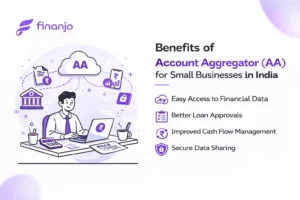
An Account Aggregator is a framework introduced by the Reserve Bank of India (RBI). It allows users to share their financial data digitally and securely, with consent. Instead of uploading documents or statements, users can grant access through a simple and secure process. If you want to learn more Account Aggregator we have made a comprehensive guide.
AA acts as a digital consent manager. With customer approval, it fetches verified financial information directly from regulated financial institutions. This data can include:
The data comes directly from trusted sources, is encrypted end-to-end, and reaches the lender in real time. Borrowers no longer need to chase multiple banks, accountants, or agencies for documents. With a few clicks and an OTP-based consent flow, their information can be securely shared, cutting down paperwork and errors.
Most SMEs in India face the same challenges when applying for credit:
Lenders require multiple documents: bank statements, GST filings, tax returns, cashflow proofs
These documents are usually shared as physical printouts or emailed PDFs
Banks verify everything manually, leading to delays and errors
SMEs without accountants struggle to prepare or preserve documentation
Many are rejected or charged higher interest rates not due to poor business performance, but lack of verified data
This credit access gap limits scaling, hiring, and business resilience – and ultimately slows India’s economic growth.
The Account Aggregator framework solves a core problem: enabling verified, seamless sharing of financial information. Instead of submitting piles of physical documents, small businesses can consent to share their bank statements with some of the GST documents (GSTR-1, GSTR-3) directly with lenders. The data flows securely from regulated financial institutions, ensuring authenticity and eliminating forgery risks.
For SMEs, this means:
The speed comes from two main factors: authenticity and automation. Since lenders receive data directly from financial institutions, they can trust it without additional manual checks. At the same time, structured digital records can be fed into automated underwriting and credit models, reducing the time taken to evaluate an application. Some lenders have already moved to same-day approvals thanks to AA integration, something that was almost impossible under the old system.
This efficiency also reduces operational costs for banks and NBFCs, making it easier for them to serve a larger number of customers without increasing manpower. For borrowers, this means faster approvals, better service, and in some cases, access to lower interest rates because of reduced perceived risk.
For applicants, the AA framework removes multiple layers of friction. Instead of uploading endless documents, they just give consent through a secure, OTP-based flow and the lender does the rest. The benefits include:
Borrowers also benefit from increased transparency, as every data request is tied to a specific purpose and duration. This shifts power back to customers, who now have visibility and control over how their information is used.
One of the strongest use cases for Account Aggregators is in helping SMEs share the financial data they already generate through tools they regularly use. For many small and medium enterprises in India, accounting and compliance tasks are managed on platforms like Tally. This means GST returns, reconciled bank transactions, and other critical records are already digitized and ready. The challenge has always been finding a secure way to transfer this information to lenders and financial institutions.
With the AA framework, that gap is bridged. Instead of relying on printed reports, PDFs sent over email, or third-party intermediaries, SMEs can now give consent to share their verified records directly from their accounting systems to banks and NBFCs. The process is safe, encrypted, and much faster.
Some practical examples include:
A grocery store applying for working capital shares six months of bank data instantly, getting approval within a day.
An MSME expanding operations uses its existing accounting records, such as GST filings, to securely pass data to a lender through the AA framework.
A rural entrepreneur without formal collateral demonstrates repayment ability by sharing verified transaction history instead of relying on paper documents.
A manufacturing unit that already keeps its books in Tally can seamlessly pass reconciled accounts and verified financial data through an AA, reducing delays and errors in the approval process.
These examples show how Account Aggregators make it easier for SMEs to prove creditworthiness and gain timely access to finance. By building on data that businesses already maintain, the AA system removes friction, improves trust, and creates new pathways for small enterprises to grow.
For banks and NBFCs, SMEs were traditionally considered risky due to fragmented records. AAs change this dynamic by providing structured, verified data directly from trusted institutions. This reduces the cost of due diligence and speeds up decision-making.
In practical terms:
Platforms like Tally AA are especially valuable because they connect existing SME accounting systems directly to the AA network, ensuring smoother integration for both lenders and borrowers.
Despite the advantages, adoption challenges remain. Awareness among SMEs, especially in rural areas, is still low. Some financial institutions are yet to fully integrate with the AA system, which creates inconsistency in availability. Digital literacy is another issue, as many entrepreneurs need guidance in understanding consent flows and digital processes.
This is where companies like Tally have an edge. With decades of trust among SMEs, Tally AA is positioned not just as a service provider but also as an educator. By guiding SMEs through adoption, it can play a critical role in building confidence in the system.
The AA ecosystem has strong regulatory backing from the Reserve Bank of India. Every licensed AA, operates under strict rules around consent, data security, and customer rights. This oversight ensures that SMEs’ financial data is handled transparently and securely.
In comparison, traditional document sharing remains largely unregulated. Once photocopies or PDFs are handed over, there are no clear rules on storage, use, or deletion. This contrast makes the AA model inherently safer and more trustworthy for small businesses.
For lenders, Account Aggregators reduce costs, improve fraud detection, and enable data-driven decision making. With access to verified records, lenders can design more inclusive credit products and serve borrowers who were earlier considered high-risk due to lack of reliable documentation. This has a direct impact on financial inclusion, especially for SMEs, micro-entrepreneurs, and first-time borrowers.
At a macroeconomic level, faster and safer loan disbursal increases credit penetration, stimulates business growth, and contributes to GDP. By cutting down inefficiencies, the AA system supports both lenders and borrowers to support this Sahamati recent released a report which reported ₹1.67 lakh crores was disbursed via AA ecosystem you can read more about it here.
SMEs struggle with credit because lenders demand extensive paperwork and verified records. Many small businesses lack formal documentation or accountants, leading to delays, high costs, or rejection.
AAs allow SMEs to share verified financial data like bank statements and GST returns directly with lenders, eliminating the need for physical paperwork and reducing approval times.
Tally AA is tailored for SMEs. Since many businesses already use Tally for accounting, they can now link their records directly to lenders through Tally AA, making credit faster and safer.
Yes. AAs are licensed by the RBI. They do not store data but securely transfer it with consent. All data is encrypted, and SMEs remain in control of access.
No. SMEs do not pay to use the AA system. The costs are borne by financial institutions integrating with AAs.
SMEs can share data like bank statements, deposits, and GST returns for certain forms and periods with lenders through an Account Aggregator
Yes. Consent is required for every request. SMEs decide what data to share, with whom, and for how long. They can revoke access anytime.
Yes. By sharing verified data, SMEs improve lender confidence, leading to faster approvals and better loan terms compared to traditional document sharing.
Many leading banks and NBFCs are integrated, though full adoption is ongoing. With platforms like Tally AA, integration is accelerating across the financial sector.
AAs will help SMEs build stronger financial identities, expand access to affordable credit, and integrate into India’s digital economy. Tally AA will play a central role in enabling this shift.
The Account Aggregator framework is more than a digital upgrade. For small businesses in India, it represents a transformation in how financial access is provided. By reducing paperwork, ensuring authenticity, and giving SMEs control, AAs make it easier for them to grow and compete. With trusted players like Tally bringing tailored solutions through Tally Account Aggregator, the system is aligned with SME needs, bridging the gap between traditional practices and a digital-first economy. As adoption grows, Account Aggregators will define how small businesses borrow, expand, and succeed in India’s future financial landscape.
Small and medium enterprises (SMEs) are the backbone of India’s economy, driving employment, innovation, and local growth. But despite their economic importance, one of the biggest obstacles SMEs face is access to formal credit. Traditional banking processes demand extensive paperwork, multiple branch visits, and long verification cycles. Many businesses – especially micro and rural enterprises – simply don’t have the time, staff, or documentation systems needed to meet these requirements.
The Account Aggregator (AA) framework, introduced by the Reserve Bank of India, is changing that landscape. It gives SMEs a secure, digital, consent-based way to share verified financial data with lenders in minutes instead of weeks. This is unlocking faster, fairer, and more inclusive credit access across India.
An Account Aggregator is a framework introduced by the Reserve Bank of India (RBI). It allows users to share their financial data digitally and securely, with consent. Instead of uploading documents or statements, users can grant access through a simple and secure process. If you want to learn more Account Aggregator we have made a comprehensive guide.
AA acts as a digital consent manager. With customer approval, it fetches verified financial information directly from regulated financial institutions. This data can include:
The data comes directly from trusted sources, is encrypted end-to-end, and reaches the lender in real time. Borrowers no longer need to chase multiple banks, accountants, or agencies for documents. With a few clicks and an OTP-based consent flow, their information can be securely shared, cutting down paperwork and errors.
Most SMEs in India face the same challenges when applying for credit:
Lenders require multiple documents: bank statements, GST filings, tax returns, cashflow proofs
These documents are usually shared as physical printouts or emailed PDFs
Banks verify everything manually, leading to delays and errors
SMEs without accountants struggle to prepare or preserve documentation
Many are rejected or charged higher interest rates not due to poor business performance, but lack of verified data
This credit access gap limits scaling, hiring, and business resilience – and ultimately slows India’s economic growth.
The Account Aggregator framework solves a core problem: enabling verified, seamless sharing of financial information. Instead of submitting piles of physical documents, small businesses can consent to share their bank statements with some of the GST documents (GSTR-1, GSTR-3) directly with lenders. The data flows securely from regulated financial institutions, ensuring authenticity and eliminating forgery risks.
For SMEs, this means:
The speed comes from two main factors: authenticity and automation. Since lenders receive data directly from financial institutions, they can trust it without additional manual checks. At the same time, structured digital records can be fed into automated underwriting and credit models, reducing the time taken to evaluate an application. Some lenders have already moved to same-day approvals thanks to AA integration, something that was almost impossible under the old system.
This efficiency also reduces operational costs for banks and NBFCs, making it easier for them to serve a larger number of customers without increasing manpower. For borrowers, this means faster approvals, better service, and in some cases, access to lower interest rates because of reduced perceived risk.
For applicants, the AA framework removes multiple layers of friction. Instead of uploading endless documents, they just give consent through a secure, OTP-based flow and the lender does the rest. The benefits include:
Borrowers also benefit from increased transparency, as every data request is tied to a specific purpose and duration. This shifts power back to customers, who now have visibility and control over how their information is used.
One of the strongest use cases for Account Aggregators is in helping SMEs share the financial data they already generate through tools they regularly use. For many small and medium enterprises in India, accounting and compliance tasks are managed on platforms like Tally. This means GST returns, reconciled bank transactions, and other critical records are already digitized and ready. The challenge has always been finding a secure way to transfer this information to lenders and financial institutions.
With the AA framework, that gap is bridged. Instead of relying on printed reports, PDFs sent over email, or third-party intermediaries, SMEs can now give consent to share their verified records directly from their accounting systems to banks and NBFCs. The process is safe, encrypted, and much faster.
Some practical examples include:
A grocery store applying for working capital shares six months of bank data instantly, getting approval within a day.
An MSME expanding operations uses its existing accounting records, such as GST filings, to securely pass data to a lender through the AA framework.
A rural entrepreneur without formal collateral demonstrates repayment ability by sharing verified transaction history instead of relying on paper documents.
A manufacturing unit that already keeps its books in Tally can seamlessly pass reconciled accounts and verified financial data through an AA, reducing delays and errors in the approval process.
These examples show how Account Aggregators make it easier for SMEs to prove creditworthiness and gain timely access to finance. By building on data that businesses already maintain, the AA system removes friction, improves trust, and creates new pathways for small enterprises to grow.
For banks and NBFCs, SMEs were traditionally considered risky due to fragmented records. AAs change this dynamic by providing structured, verified data directly from trusted institutions. This reduces the cost of due diligence and speeds up decision-making.
In practical terms:
Platforms like Tally AA are especially valuable because they connect existing SME accounting systems directly to the AA network, ensuring smoother integration for both lenders and borrowers.
Despite the advantages, adoption challenges remain. Awareness among SMEs, especially in rural areas, is still low. Some financial institutions are yet to fully integrate with the AA system, which creates inconsistency in availability. Digital literacy is another issue, as many entrepreneurs need guidance in understanding consent flows and digital processes.
This is where companies like Tally have an edge. With decades of trust among SMEs, Tally AA is positioned not just as a service provider but also as an educator. By guiding SMEs through adoption, it can play a critical role in building confidence in the system.
The AA ecosystem has strong regulatory backing from the Reserve Bank of India. Every licensed AA, operates under strict rules around consent, data security, and customer rights. This oversight ensures that SMEs’ financial data is handled transparently and securely.
In comparison, traditional document sharing remains largely unregulated. Once photocopies or PDFs are handed over, there are no clear rules on storage, use, or deletion. This contrast makes the AA model inherently safer and more trustworthy for small businesses.
For lenders, Account Aggregators reduce costs, improve fraud detection, and enable data-driven decision making. With access to verified records, lenders can design more inclusive credit products and serve borrowers who were earlier considered high-risk due to lack of reliable documentation. This has a direct impact on financial inclusion, especially for SMEs, micro-entrepreneurs, and first-time borrowers.
At a macroeconomic level, faster and safer loan disbursal increases credit penetration, stimulates business growth, and contributes to GDP. By cutting down inefficiencies, the AA system supports both lenders and borrowers to support this Sahamati recent released a report which reported ₹1.67 lakh crores was disbursed via AA ecosystem you can read more about it here.
SMEs struggle with credit because lenders demand extensive paperwork and verified records. Many small businesses lack formal documentation or accountants, leading to delays, high costs, or rejection.
AAs allow SMEs to share verified financial data like bank statements and GST returns directly with lenders, eliminating the need for physical paperwork and reducing approval times.
Tally AA is tailored for SMEs. Since many businesses already use Tally for accounting, they can now link their records directly to lenders through Tally AA, making credit faster and safer.
Yes. AAs are licensed by the RBI. They do not store data but securely transfer it with consent. All data is encrypted, and SMEs remain in control of access.
No. SMEs do not pay to use the AA system. The costs are borne by financial institutions integrating with AAs.
SMEs can share data like bank statements, deposits, and GST returns for certain forms and periods with lenders through an Account Aggregator
Yes. Consent is required for every request. SMEs decide what data to share, with whom, and for how long. They can revoke access anytime.
Yes. By sharing verified data, SMEs improve lender confidence, leading to faster approvals and better loan terms compared to traditional document sharing.
Many leading banks and NBFCs are integrated, though full adoption is ongoing. With platforms like Tally AA, integration is accelerating across the financial sector.
AAs will help SMEs build stronger financial identities, expand access to affordable credit, and integrate into India’s digital economy. Tally AA will play a central role in enabling this shift.
The Account Aggregator framework is more than a digital upgrade. For small businesses in India, it represents a transformation in how financial access is provided. By reducing paperwork, ensuring authenticity, and giving SMEs control, AAs make it easier for them to grow and compete. With trusted players like Tally bringing tailored solutions through Tally Account Aggregator, the system is aligned with SME needs, bridging the gap between traditional practices and a digital-first economy. As adoption grows, Account Aggregators will define how small businesses borrow, expand, and succeed in India’s future financial landscape.
A contributor to the Finanjo blog, where I share insightful and easy-to-understand content focused on educating readers about finance. With a clear and approachable writing style, I simplify complex topics to make them more understandable.
A contributor to the Finanjo blog, where I share insightful and easy-to-understand content focused on educating readers about finance. With a clear and approachable writing style, I simplify complex topics to make them more understandable.

