There may be times when you need urgent cash but only have available credit on your credit card. In such situations, Transfer Money from Credit Card to a bank account can seem like a convenient solution. While credit cards are primarily meant for purchases, there are legitimate ways to convert your credit limit into bank account funds. However, these transfers usually come with fees, higher interest rates, and credit score implications.
This blog explains all possible methods, charges involved, step-by-step processes, and important precautions to help you make an informed decision.
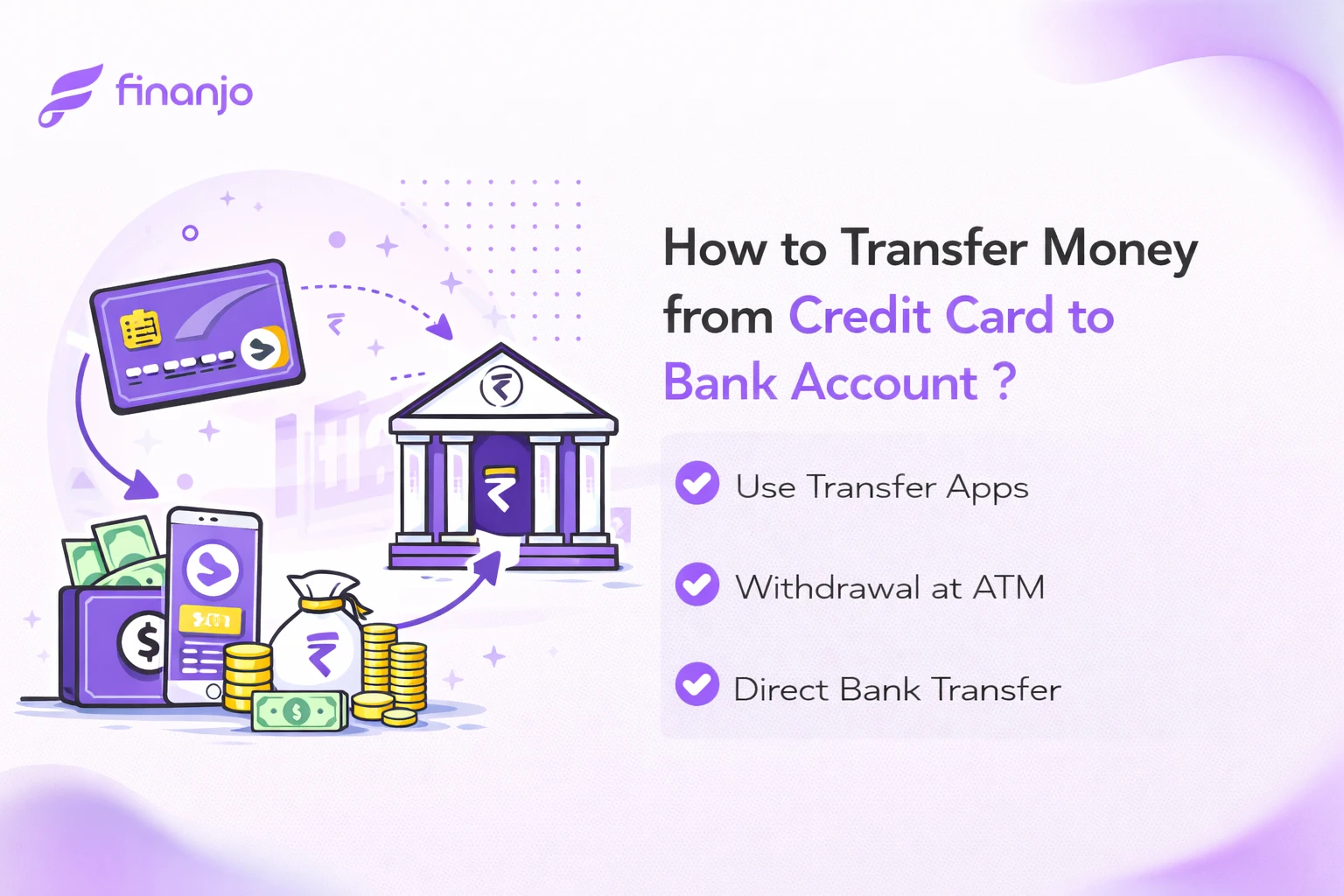
Yes, you can transfer money from a credit card to your bank account—but not always directly. Most banks do not allow a simple “credit card to bank transfer” like a debit card. Instead, transfers happen through indirect methods such as cash advances, loans on credit cards, or third-party payment platforms.
Each method differs in:
Interest rate
Processing fees
Repayment structure
Impact on credit score
Here are all the ways you can move funds from a credit card to any bank account:
This is the most commonly used method in India. You add money to a wallet using your credit card and then transfer that wallet balance to your bank account.
Many major banks now allow direct transfer from credit card to bank account through their mobile banking apps.
This method is reliable but expensive.
This is the cheapest and safest method. Banks offer “Loan on Credit Card” or “Personal Loan on Credit Limit,” where funds are transferred directly to your bank account.
If you need money for 3–24 months, this is the best method.
If your goal is to clear another credit card bill or loan, banks let you transfer existing debt to your bank account or another card with lower interest.
Interest rates are much lower than cash advances.
The simplest but most expensive method.
Use this only if nothing else is available.
| Step | Action |
|---|---|
| 1 | Check available credit limit |
| 2 | Choose method (loan, cash advance, wallet) |
| 3 | Review interest rates & fees |
| 4 | Initiate transfer or withdrawal |
| 5 | Confirm repayment schedule |
| 6 | Monitor credit card statements |
| Type of Charge | Typical Range |
| Wallet Loading Fee | 2%–4% |
| Cash Advance Fee | 2.5%–3% of amount |
| Monthly Interest | 2.5%–4% (30%–48% APR) |
| Loan Processing Fee | 1%–2% |
| GST | 18% on fees |
Important: Transferring money from a credit card removes the interest-free period until you clear the full outstanding balance.
| Method | Cost | When to Use |
| Loan on Credit Card | Low | Best for planned needs, EMIs |
| Balance Transfer | Medium | For clearing debt |
| Wallet → Bank Transfer | High | Instant small transfers |
| Cash Withdrawal | Very High | Absolute emergencies |
Transferring money from a credit card can impact your credit score in the following ways:
| Factor | Impact |
|---|---|
| Credit utilisation | Increases (negative if >30%) |
| Repayment behaviour | Positive if EMIs paid on time |
| Missed payments | Severe negative impact |
| Repeated cash advances | High risk to score |
Used responsibly, it won’t hurt your score but misuse can cause long-term damage.
Yes, it is safe when done through:
Avoid any third-party apps or unofficial websites.
Only if necessary. It is an expensive form of borrowing. Consider cheaper alternatives such as:
Treating cash advance like regular spending
Ignoring interest compounding
Missing EMI due dates
Using multiple cards for cash withdrawals
Not checking repayment terms
| Alternative | When to Use |
|---|---|
| Personal Loan | Larger amount, lower interest |
| Overdraft Facility | Short-term cash flow needs |
| Gold Loan | Lower interest, secured |
| Emergency Fund | Best zero-cost option |
Instant access to funds
No separate loan approval required
Useful during emergencies
High interest rates
Immediate interest calculation
Increased credit utilisation
Best used only for short-term or emergency needs.
Understanding the tax impact of transferring money from a credit card is important to avoid confusion and compliance issues. While the transaction itself is simple, the charges and interest involved have specific tax treatments.
No, the money transferred from a credit card to your bank account is not considered taxable income. It is treated as borrowed funds, not earnings. Since the amount must be repaid to the bank along with interest, it does not fall under income tax.
However, if the transferred amount is later used to generate income (for example, in business activities), any profit earned may be taxable under applicable income tax rules.
Yes, GST is applicable on charges related to credit card cash transfers.
Processing fees
Convenience charges
Cash advance fees
GST is typically charged at 18% on these fees. The GST amount is added to your credit card bill and increases the overall cost of borrowing.
For personal expenses, the interest paid on credit card cash transfers is not tax-deductible.
For business purposes, interest may be claimed as a business expense, provided:
The borrowed amount is used strictly for business
Proper documentation and records are maintained
Always consult a tax professional before claiming such deductions to ensure compliance.
While transferring money from a credit card should not be a regular habit, it can be useful in specific situations where quick access to funds is required.
Unexpected medical expenses often require immediate cash payments. In cases where insurance approvals are delayed or savings are insufficient, a credit card transfer can provide instant liquidity. Choosing an EMI-based loan on credit card helps manage repayment without financial strain.
Small business owners and freelancers may face temporary cash flow gaps due to delayed payments or seasonal slowdowns. A credit card to bank transfer can help cover:
Vendor payments
Utility bills
Salary payouts
This option works best when the cash gap is short and repayment capacity is clear.
Urgent travel bookings or education-related fees sometimes demand immediate payments. Transferring money from a credit card can help manage such expenses when:
Funds are temporarily unavailable
EMI options are preferred for repayment
However, for large or long-term expenses, personal or education loans may be more cost-effective.
No. There is no free method to transfer money from a credit card to a bank account. All methods wallets, cash advance, and direct bank transfers carry fees or interest.
The cheapest and safest option is the Loan on Credit Card or Credit Card EMI Loan, as it offers lower interest rates, structured EMIs, and direct transfer to your bank account.
It depends on the method:
Not directly. But if you delay repayment or revolve the balance, your utilization increases and interest accumulates which can reduce your credit score. Paying on time keeps your score safe.
You cannot directly use UPI to send money from a credit card to a bank account. However, some apps allow loading a wallet via credit card and then withdrawing using UPI but fees will apply.
Yes, these are RBI-regulated platforms and safe for transfers. But always check the applicable fees. Never use unverified third-party apps that claim “zero fee transfers.”
You can transfer up to your available credit limit or cash limit, depending on the method. Wallet apps may have their own monthly or per-transaction limits.
No. There is no grace period for cash-like transactions. Interest starts immediately until the entire outstanding amount is cleared.
Once the transfer is completed, it cannot be reversed. Wallet transfers and direct bank transfers are final. For mistaken transfers, you must contact customer support, but success is not guaranteed.
Only if absolutely necessary. The fees and interest make it expensive. Instead, choose:
These options are usually far cheaper than wallet or cash advance transfers.
Transferring money from a credit card to a bank account is possible, quick, and sometimes necessary but it comes with higher costs compared to normal credit card usage. The cheapest method is taking a loan on credit card or balance transfer, while wallet transfers and cash withdrawals should be used cautiously due to high fees.
Choose the method carefully based on urgency, repayment ability, and total cost.
There may be times when you need urgent cash but only have available credit on your credit card. In such situations, Transfer Money from Credit Card to a bank account can seem like a convenient solution. While credit cards are primarily meant for purchases, there are legitimate ways to convert your credit limit into bank account funds. However, these transfers usually come with fees, higher interest rates, and credit score implications.
This blog explains all possible methods, charges involved, step-by-step processes, and important precautions to help you make an informed decision.
Yes, you can transfer money from a credit card to your bank account—but not always directly. Most banks do not allow a simple “credit card to bank transfer” like a debit card. Instead, transfers happen through indirect methods such as cash advances, loans on credit cards, or third-party payment platforms.
Each method differs in:
Interest rate
Processing fees
Repayment structure
Impact on credit score
Here are all the ways you can move funds from a credit card to any bank account:
This is the most commonly used method in India. You add money to a wallet using your credit card and then transfer that wallet balance to your bank account.
Many major banks now allow direct transfer from credit card to bank account through their mobile banking apps.
This method is reliable but expensive.
This is the cheapest and safest method. Banks offer “Loan on Credit Card” or “Personal Loan on Credit Limit,” where funds are transferred directly to your bank account.
If you need money for 3–24 months, this is the best method.
If your goal is to clear another credit card bill or loan, banks let you transfer existing debt to your bank account or another card with lower interest.
Interest rates are much lower than cash advances.
The simplest but most expensive method.
Use this only if nothing else is available.
| Step | Action |
|---|---|
| 1 | Check available credit limit |
| 2 | Choose method (loan, cash advance, wallet) |
| 3 | Review interest rates & fees |
| 4 | Initiate transfer or withdrawal |
| 5 | Confirm repayment schedule |
| 6 | Monitor credit card statements |
| Type of Charge | Typical Range |
| Wallet Loading Fee | 2%–4% |
| Cash Advance Fee | 2.5%–3% of amount |
| Monthly Interest | 2.5%–4% (30%–48% APR) |
| Loan Processing Fee | 1%–2% |
| GST | 18% on fees |
Important: Transferring money from a credit card removes the interest-free period until you clear the full outstanding balance.
| Method | Cost | When to Use |
| Loan on Credit Card | Low | Best for planned needs, EMIs |
| Balance Transfer | Medium | For clearing debt |
| Wallet → Bank Transfer | High | Instant small transfers |
| Cash Withdrawal | Very High | Absolute emergencies |
Transferring money from a credit card can impact your credit score in the following ways:
| Factor | Impact |
|---|---|
| Credit utilisation | Increases (negative if >30%) |
| Repayment behaviour | Positive if EMIs paid on time |
| Missed payments | Severe negative impact |
| Repeated cash advances | High risk to score |
Used responsibly, it won’t hurt your score but misuse can cause long-term damage.
Yes, it is safe when done through:
Avoid any third-party apps or unofficial websites.
Only if necessary. It is an expensive form of borrowing. Consider cheaper alternatives such as:
Treating cash advance like regular spending
Ignoring interest compounding
Missing EMI due dates
Using multiple cards for cash withdrawals
Not checking repayment terms
| Alternative | When to Use |
|---|---|
| Personal Loan | Larger amount, lower interest |
| Overdraft Facility | Short-term cash flow needs |
| Gold Loan | Lower interest, secured |
| Emergency Fund | Best zero-cost option |
Instant access to funds
No separate loan approval required
Useful during emergencies
High interest rates
Immediate interest calculation
Increased credit utilisation
Best used only for short-term or emergency needs.
Understanding the tax impact of transferring money from a credit card is important to avoid confusion and compliance issues. While the transaction itself is simple, the charges and interest involved have specific tax treatments.
No, the money transferred from a credit card to your bank account is not considered taxable income. It is treated as borrowed funds, not earnings. Since the amount must be repaid to the bank along with interest, it does not fall under income tax.
However, if the transferred amount is later used to generate income (for example, in business activities), any profit earned may be taxable under applicable income tax rules.
Yes, GST is applicable on charges related to credit card cash transfers.
Processing fees
Convenience charges
Cash advance fees
GST is typically charged at 18% on these fees. The GST amount is added to your credit card bill and increases the overall cost of borrowing.
For personal expenses, the interest paid on credit card cash transfers is not tax-deductible.
For business purposes, interest may be claimed as a business expense, provided:
The borrowed amount is used strictly for business
Proper documentation and records are maintained
Always consult a tax professional before claiming such deductions to ensure compliance.
While transferring money from a credit card should not be a regular habit, it can be useful in specific situations where quick access to funds is required.
Unexpected medical expenses often require immediate cash payments. In cases where insurance approvals are delayed or savings are insufficient, a credit card transfer can provide instant liquidity. Choosing an EMI-based loan on credit card helps manage repayment without financial strain.
Small business owners and freelancers may face temporary cash flow gaps due to delayed payments or seasonal slowdowns. A credit card to bank transfer can help cover:
Vendor payments
Utility bills
Salary payouts
This option works best when the cash gap is short and repayment capacity is clear.
Urgent travel bookings or education-related fees sometimes demand immediate payments. Transferring money from a credit card can help manage such expenses when:
Funds are temporarily unavailable
EMI options are preferred for repayment
However, for large or long-term expenses, personal or education loans may be more cost-effective.
No. There is no free method to transfer money from a credit card to a bank account. All methods wallets, cash advance, and direct bank transfers carry fees or interest.
The cheapest and safest option is the Loan on Credit Card or Credit Card EMI Loan, as it offers lower interest rates, structured EMIs, and direct transfer to your bank account.
It depends on the method:
Not directly. But if you delay repayment or revolve the balance, your utilization increases and interest accumulates which can reduce your credit score. Paying on time keeps your score safe.
You cannot directly use UPI to send money from a credit card to a bank account. However, some apps allow loading a wallet via credit card and then withdrawing using UPI but fees will apply.
Yes, these are RBI-regulated platforms and safe for transfers. But always check the applicable fees. Never use unverified third-party apps that claim “zero fee transfers.”
You can transfer up to your available credit limit or cash limit, depending on the method. Wallet apps may have their own monthly or per-transaction limits.
No. There is no grace period for cash-like transactions. Interest starts immediately until the entire outstanding amount is cleared.
Once the transfer is completed, it cannot be reversed. Wallet transfers and direct bank transfers are final. For mistaken transfers, you must contact customer support, but success is not guaranteed.
Only if absolutely necessary. The fees and interest make it expensive. Instead, choose:
These options are usually far cheaper than wallet or cash advance transfers.
Transferring money from a credit card to a bank account is possible, quick, and sometimes necessary but it comes with higher costs compared to normal credit card usage. The cheapest method is taking a loan on credit card or balance transfer, while wallet transfers and cash withdrawals should be used cautiously due to high fees.
Choose the method carefully based on urgency, repayment ability, and total cost.
A contributor to the Finanjo blog, where I share insightful and easy-to-understand content focused on educating readers about finance. With a clear and approachable writing style, I simplify complex topics to make them more understandable.
A contributor to the Finanjo blog, where I share insightful and easy-to-understand content focused on educating readers about finance. With a clear and approachable writing style, I simplify complex topics to make them more understandable.

