In today’s fast-paced financial world, your CIBIL score isn’t just a number, it’s the key that can unlock your dreams. Whether you’re planning to buy your first car, get a home loan, or simply apply for a credit card, lenders rely heavily on this three-digit score to judge your creditworthiness.
In India’s digital lending era, where approvals can happen in seconds, your CIBIL score often becomes your first impression with banks and financial institutions. A high score can lead to faster loan approvals, lower interest rates, and higher credit limits. On the other hand, a low score might mean loan rejections, higher borrowing costs, and a longer financial journey to recover credibility.
Understanding and maintaining a strong CIBIL score isn’t just smart it’s essential for navigating India’s competitive credit landscape.
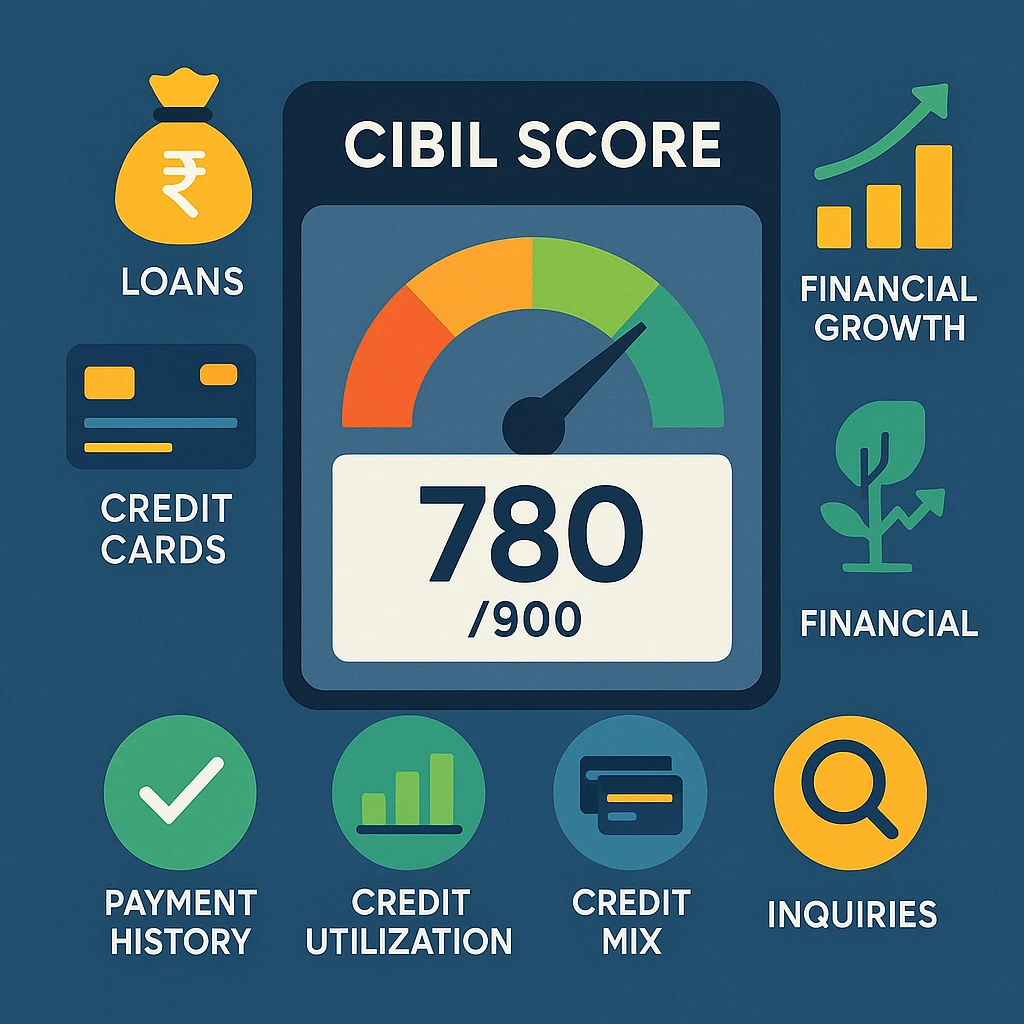
CIBIL, short for Credit Information Bureau (India) Limited, now operating as TransUnion CIBIL, is India’s most trusted credit bureau. It collects and maintains your credit history, helping banks and financial institutions evaluate your reliability as a borrower. Every time you apply for a personal loan, home loan, car loan, or credit card, your CIBIL score plays a decisive role in whether your application gets approved.
A CIBIL score is a three-digit number ranging from 300 to 900 that represents your creditworthiness. This score is essentially a snapshot of your financial discipline how you manage loans, credit cards, and other debts. A higher score reflects responsible credit behavior, while a lower score signals risk to lenders.
Banks and NBFCs often use your CIBIL score as the first filter. A high score can lead to instant or quicker approvals, saving you time and hassle.
Borrowers with a strong CIBIL score often enjoy reduced interest rates, making loans more affordable.
Your credit limit on cards and loans is influenced by your score. Better scores often translate to higher borrowing capacity.
A good score gives you leverage when negotiating terms on loans or credit cards.
Regularly monitoring your CIBIL score helps identify errors or fraudulent activity early, allowing you to take corrective steps.
You can check your CIBIL score online through the official TransUnion CIBIL website or authorized partners.
In India’s digital lending era, where approvals happen in seconds, your CIBIL score is more than just a number it’s your financial identity. A healthy score not only opens doors to better loans but also ensures you pay less interest, enjoy higher credit limits, and maintain financial confidence.
Your CIBIL score is a reflection of your financial behavior and overall creditworthiness. While TransUnion CIBIL does not disclose the exact calculation formula, your score is influenced by several key factors, each carrying a specific weight.
Understanding these factors can help you improve your CIBIL score, secure faster loan approvals, and access better interest rates on loans and credit cards. Regular monitoring and responsible credit management are the keys to maintaining a strong financial profile.
| Factor | Approx. Weightage | How It Affects Your Score |
|---|---|---|
| Payment History | 30% | Consistently paying EMIs and credit card bills on time improves your score. Missed or delayed payments can significantly lower it. |
| Credit Utilization Ratio | 25% | Using more than 30% of your available credit signals over-dependence on credit and can reduce your score. |
| Credit Mix & Duration | 25% | A balanced mix of secured loans (home/car) and unsecured credit (credit cards), plus long-standing accounts, boosts your score. |
| Number of Hard Inquiries | 10% | Each loan or credit card application triggers a hard inquiry. Too many inquiries in a short period can lower your score. |
| Other Factors | 10% | Includes age of oldest account, total active accounts, and overall credit behavior. Maintaining long-term responsible credit usage helps. |
Imagine a person named Rahul. His CIBIL score depends on 5 factors:
Rahul usually pays all his loans and credit cards on time.
He had one small delay last month.
So, he gets 28 out of 30 points for this factor.
This is how much of his available credit Rahul is using.
He uses about 40% of his credit card limit (ideally it should be under 30%).
So, he gets 20 out of 25 points here.
Rahul has a mix of loans: a car loan (secured) and a credit card (unsecured).
He has had these accounts for a long time.
He gets 23 out of 25 points.
Each time Rahul applies for a new loan or credit card, it counts as a “hard inquiry.”
He applied for one loan recently, which slightly reduces his score.
He gets 8 out of 10 points.
Includes age of accounts, total accounts, and overall credit behavior.
Rahul’s accounts are old and well-managed.
He gets 9 out of 10 points.
Payment History: 28
Credit Utilization: 20
Credit Mix & Duration: 23
Hard Inquiries: 8
Other Factors: 9
Total = 28 + 20 + 23 + 8 + 9 = 88 out of 100Now, CIBIL uses a three-digit scale (300–900), so this roughly translates to:
CIBIL Score ≈ 780/900
Conclusion: Rahul has a good CIBIL score because he pays on time, has a healthy credit mix, and manages his credit responsibly.
Lenders prefer applicants with scores above 750. A higher score can result in better loan terms and lower EMIs.
Quick approvals and lower interest rates are linked directly to a healthy credit score.
Your eligibility, credit limit, and reward programs are influenced by your score.
A strong score may help secure loans at competitive rates, making your dream car more affordable.
A CIBIL score is a three-digit number (ranging from 300 to 900) that represents your creditworthiness. It shows how responsibly you have managed loans, credit cards, and other financial obligations. Lenders use it to decide whether to approve your loans or credit applications.
The CIBIL score is provided by TransUnion CIBIL, India’s first and most trusted credit information bureau. It collects data from banks and financial institutions to calculate your score.
The main factors while calculating CIBIL score include:
CIBIL uses a proprietary formula to assign points for each factor listed above. Your payment history and credit utilization are the most important, followed by credit mix, hard inquiries, and other factors. The total points are then normalized to a score between 300 and 900.
A score above 750 is generally considered good and increases your chances of loan approval at better interest rates. Scores between 650–750 are average, and anything below 650 may make it harder to get credit.
It’s recommended to check your CIBIL score at least once a year. Regular monitoring helps identify errors, spot fraudulent activity, and track your credit improvement.
Yes! You can improve your score by:
Yes. You can check your CIBIL score online for free once a year through the official TransUnion CIBIL website or authorized partners.
Yes. A low score may lead to loan rejection or higher interest rates. Lenders see a low score as a risk, so improving your score is crucial for better financial opportunities.
Yes, closing old accounts can reduce your credit age, which may negatively impact your score. It’s better to keep long-standing accounts active while managing them responsibly.
In today’s fast-paced financial world, your CIBIL score isn’t just a number, it’s the key that can unlock your dreams. Whether you’re planning to buy your first car, get a home loan, or simply apply for a credit card, lenders rely heavily on this three-digit score to judge your creditworthiness.
In India’s digital lending era, where approvals can happen in seconds, your CIBIL score often becomes your first impression with banks and financial institutions. A high score can lead to faster loan approvals, lower interest rates, and higher credit limits. On the other hand, a low score might mean loan rejections, higher borrowing costs, and a longer financial journey to recover credibility.
Understanding and maintaining a strong CIBIL score isn’t just smart it’s essential for navigating India’s competitive credit landscape.
CIBIL, short for Credit Information Bureau (India) Limited, now operating as TransUnion CIBIL, is India’s most trusted credit bureau. It collects and maintains your credit history, helping banks and financial institutions evaluate your reliability as a borrower. Every time you apply for a personal loan, home loan, car loan, or credit card, your CIBIL score plays a decisive role in whether your application gets approved.
A CIBIL score is a three-digit number ranging from 300 to 900 that represents your creditworthiness. This score is essentially a snapshot of your financial discipline how you manage loans, credit cards, and other debts. A higher score reflects responsible credit behavior, while a lower score signals risk to lenders.
Banks and NBFCs often use your CIBIL score as the first filter. A high score can lead to instant or quicker approvals, saving you time and hassle.
Borrowers with a strong CIBIL score often enjoy reduced interest rates, making loans more affordable.
Your credit limit on cards and loans is influenced by your score. Better scores often translate to higher borrowing capacity.
A good score gives you leverage when negotiating terms on loans or credit cards.
Regularly monitoring your CIBIL score helps identify errors or fraudulent activity early, allowing you to take corrective steps.
You can check your CIBIL score online through the official TransUnion CIBIL website or authorized partners.
In India’s digital lending era, where approvals happen in seconds, your CIBIL score is more than just a number it’s your financial identity. A healthy score not only opens doors to better loans but also ensures you pay less interest, enjoy higher credit limits, and maintain financial confidence.
Your CIBIL score is a reflection of your financial behavior and overall creditworthiness. While TransUnion CIBIL does not disclose the exact calculation formula, your score is influenced by several key factors, each carrying a specific weight.
Understanding these factors can help you improve your CIBIL score, secure faster loan approvals, and access better interest rates on loans and credit cards. Regular monitoring and responsible credit management are the keys to maintaining a strong financial profile.
| Factor | Approx. Weightage | How It Affects Your Score |
|---|---|---|
| Payment History | 30% | Consistently paying EMIs and credit card bills on time improves your score. Missed or delayed payments can significantly lower it. |
| Credit Utilization Ratio | 25% | Using more than 30% of your available credit signals over-dependence on credit and can reduce your score. |
| Credit Mix & Duration | 25% | A balanced mix of secured loans (home/car) and unsecured credit (credit cards), plus long-standing accounts, boosts your score. |
| Number of Hard Inquiries | 10% | Each loan or credit card application triggers a hard inquiry. Too many inquiries in a short period can lower your score. |
| Other Factors | 10% | Includes age of oldest account, total active accounts, and overall credit behavior. Maintaining long-term responsible credit usage helps. |
Imagine a person named Rahul. His CIBIL score depends on 5 factors:
Rahul usually pays all his loans and credit cards on time.
He had one small delay last month.
So, he gets 28 out of 30 points for this factor.
This is how much of his available credit Rahul is using.
He uses about 40% of his credit card limit (ideally it should be under 30%).
So, he gets 20 out of 25 points here.
Rahul has a mix of loans: a car loan (secured) and a credit card (unsecured).
He has had these accounts for a long time.
He gets 23 out of 25 points.
Each time Rahul applies for a new loan or credit card, it counts as a “hard inquiry.”
He applied for one loan recently, which slightly reduces his score.
He gets 8 out of 10 points.
Includes age of accounts, total accounts, and overall credit behavior.
Rahul’s accounts are old and well-managed.
He gets 9 out of 10 points.
Payment History: 28
Credit Utilization: 20
Credit Mix & Duration: 23
Hard Inquiries: 8
Other Factors: 9
Total = 28 + 20 + 23 + 8 + 9 = 88 out of 100Now, CIBIL uses a three-digit scale (300–900), so this roughly translates to:
CIBIL Score ≈ 780/900
Conclusion: Rahul has a good CIBIL score because he pays on time, has a healthy credit mix, and manages his credit responsibly.
Lenders prefer applicants with scores above 750. A higher score can result in better loan terms and lower EMIs.
Quick approvals and lower interest rates are linked directly to a healthy credit score.
Your eligibility, credit limit, and reward programs are influenced by your score.
A strong score may help secure loans at competitive rates, making your dream car more affordable.
A CIBIL score is a three-digit number (ranging from 300 to 900) that represents your creditworthiness. It shows how responsibly you have managed loans, credit cards, and other financial obligations. Lenders use it to decide whether to approve your loans or credit applications.
The CIBIL score is provided by TransUnion CIBIL, India’s first and most trusted credit information bureau. It collects data from banks and financial institutions to calculate your score.
The main factors while calculating CIBIL score include:
CIBIL uses a proprietary formula to assign points for each factor listed above. Your payment history and credit utilization are the most important, followed by credit mix, hard inquiries, and other factors. The total points are then normalized to a score between 300 and 900.
A score above 750 is generally considered good and increases your chances of loan approval at better interest rates. Scores between 650–750 are average, and anything below 650 may make it harder to get credit.
It’s recommended to check your CIBIL score at least once a year. Regular monitoring helps identify errors, spot fraudulent activity, and track your credit improvement.
Yes! You can improve your score by:
Yes. You can check your CIBIL score online for free once a year through the official TransUnion CIBIL website or authorized partners.
Yes. A low score may lead to loan rejection or higher interest rates. Lenders see a low score as a risk, so improving your score is crucial for better financial opportunities.
Yes, closing old accounts can reduce your credit age, which may negatively impact your score. It’s better to keep long-standing accounts active while managing them responsibly.
A contributor to the Finanjo blog, where I share insightful and easy-to-understand content focused on educating readers about finance. With a clear and approachable writing style, I simplify complex topics to make them more understandable.
A contributor to the Finanjo blog, where I share insightful and easy-to-understand content focused on educating readers about finance. With a clear and approachable writing style, I simplify complex topics to make them more understandable.

