
At Finanjo, we often notice something about the first few years of someone’s career. Financial decisions rarely arrive as part of a grand and organised plan. They appear gradually. One small choice at a time – be it that SIP, health insurance or EMI.
Rohan’s story reflects that pattern.
He had recently moved to Hyderabad for his second job. The change was not dramatic. Just the quiet upgrades that come with a slightly better salary. A cleaner apartment. Weekend dinners that did not require constant budgeting. One colleague even convinced him to start a SIP during a lunch break.
Health insurance came up once during HR onboarding. A quick slide buried inside a long presentation. He nodded along like everyone else in the room and forgot about it.
A few weeks later, during a normal office conversation, a teammate mentioned spending almost ₹2 lakh after a minor accident. Nothing extreme. No complicated surgery. Just hospital observation, tests, and treatment for a few days.
The number stayed in his head longer than expected.
It was not catastrophic. But it was not small either. Something about that conversation quietly changed how he thought about medical expenses. Medical costs rarely follow the timelines people imagine for themselves.
Among young professionals in India, health insurance occupies a strange space. Everyone agrees it matters. Yet very few people treat it as something urgent.
The early phase of a career has its own distractions. The first meaningful salary. Rent in Bengaluru or Hyderabad. A weekend trip with friends. Perhaps a mutual fund SIP because someone insisted it was the responsible thing to do.
Insurance usually stays in the background.
Healthcare costs move in the opposite direction. Over the last decade, treatment expenses across private hospitals in India have risen steadily. Medical inflation in the country is often estimated between 12 and 14 percent annually. That is much higher than the inflation most people notice in everyday spending.
According to India’s National Sample Survey, the average hospitalisation cost in private hospitals can exceed ₹31,000 per case. Public hospitals are far cheaper, averaging closer to ₹4,400.
These numbers only tell part of the story. Certain procedures climb far beyond that range. Medical emergencies also rarely arrive in dramatic ways. A routine fever that worsens. A road accident during an ordinary commute. A parent who suddenly needs surgery.
These things appear inside otherwise normal weeks. And the financial impact can surprise even responsible households. Many young earners rely entirely on employer health insurance. For a while, that works perfectly well. Until circumstances change.
Careers today rarely remain tied to one organisation for decades. People switch jobs. Some take sabbaticals. Others move cities or start businesses. Employer health coverage usually ends the moment employment does.
Which explains why personal health insurance becomes relevant much earlier than most people expect. The first policy someone buys often stays with them for decades. That makes the decision worth thinking through carefully.
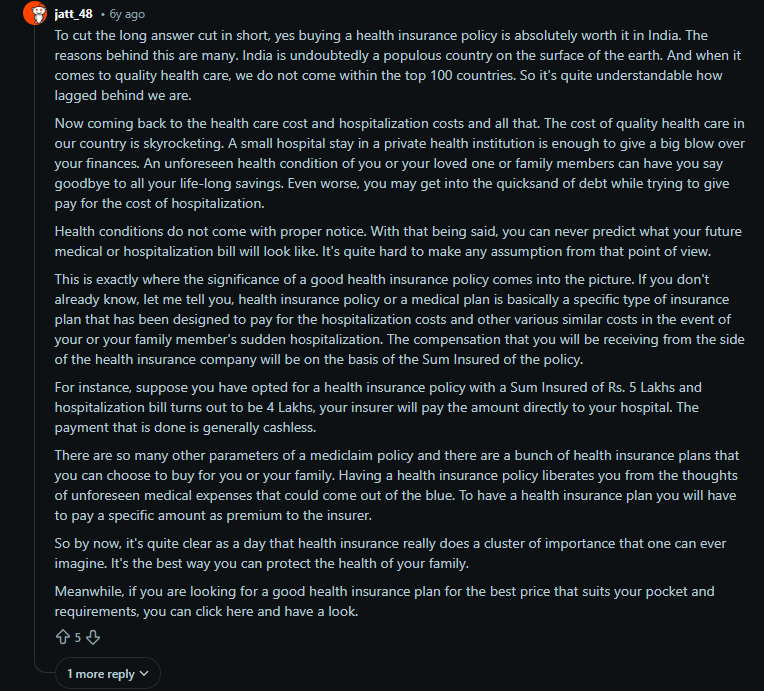
Before comparing premiums or browsing policy brochures, it helps to pause and ask a simpler question. What exactly does health insurance do?
At its core, it absorbs the financial shock of medical treatment. When hospitalisation becomes necessary, the insurer pays eligible costs depending on the policy structure.
Most comprehensive health insurance policies in India cover several categories of medical expenses.
| Medical Expense Category | What It Typically Covers |
| Hospital room charges | Shared room, private room, ICU |
| Doctor consultation fees | Specialist consultations and treatment |
| Surgical procedures | Operation theatre charges and surgeon fees |
| Diagnostic tests | Blood tests, imaging scans, pathology |
| Medicines | Drugs administered during hospitalisation |
Without insurance, these costs come directly from personal savings. Hospital bills escalate faster than most people expect.
Studies on healthcare spending in India repeatedly show that patients in private hospitals still pay a large portion of expenses out of pocket. Even when certain insurance schemes exist. For someone still building an emergency fund, one hospitalisation can disrupt financial stability for years.
Insurance reshapes that risk. Instead of unpredictable medical bills, individuals pay a predictable annual premium. Once people understand this, another question usually appears. If companies already provide health insurance, why buy another policy?
Employer health insurance often feels like a complete solution.
For many professionals, it is the first time they encounter health coverage. The company includes it as part of employee benefits and everything appears straightforward at first glance.
The limitation only becomes visible after a closer look. Employer policies remain active only during employment. Change jobs, take a career break, or leave corporate work entirely and the coverage disappears.
Modern careers move quickly. Job transitions every three or four years are common, especially in technology and consulting sectors. Which raises a practical question. What happens to health coverage during those transitions?
Personal health insurance fills that gap.
| Factor | Employer Health Policy | Personal Health Policy |
| Coverage duration | Valid only during employment | Independent of employment |
| Policy design | Fixed by employer | Customisable coverage |
| Portability | Ends with job change | Lifetime renewability |
| Dependents coverage | Often limited | Flexible family coverage |
Another detail often goes unnoticed. Coverage size.
Many employer policies offer coverage between ₹3 lakh and ₹5 lakh. In large metropolitan hospitals, that amount may only cover part of a major procedure. Personal health insurance provides continuity and control.
Once that becomes clear, a second decision appears. How much coverage should someone actually choose?
First-time buyers often gravitate toward the lowest coverage option available. The reasoning seems sensible. Lower coverage means a lower premium.
Initially, that feels efficient. The limitation only becomes visible during medical emergencies.
Healthcare costs vary widely across cities. Treatments in metropolitan areas such as Mumbai, Delhi, Bengaluru, or Hyderabad tend to be significantly more expensive than those in smaller towns. Financial planners often recommend the following coverage ranges.
| City Category | Suggested Minimum Coverage |
| Tier 1 cities | ₹10-15 lakh |
| Tier 2 cities | ₹7-10 lakh |
| Smaller cities | ₹5-7 lakh |
Meanwhile, household medical spending in India still relies heavily on personal funds. Surveys show a large portion of hospitalisation costs are paid directly by families. Adequate coverage reduces that exposure. But the coverage amount alone does not determine whether claims will proceed smoothly.
Another practical detail becomes important. Hospital networks.
One of the most useful features of health insurance is cashless hospitalisation.
Instead of paying hospital bills upfront and seeking reimbursement later, the insurer settles approved expenses directly with the hospital. It sounds simple. But it depends entirely on hospital networks.
Cashless treatment works only at hospitals included in the insurer’s network. During emergencies, that detail becomes crucial.
| Network Factor | Why It Matters |
| Number of hospitals | Larger networks provide more treatment options |
| Hospitals in your city | Faster access during emergencies |
| Quality of hospitals | Access to reliable healthcare facilities |
| Claim processing | Faster admission approvals |
Insurers with extensive hospital networks provide greater flexibility, especially for professionals who relocate frequently. Yet hospital networks are only part of the policy mechanics. Another component quietly influences coverage. Waiting periods.
Health insurance policies include waiting periods for certain conditions. These are timeframes during which specific treatments are not covered immediately after purchasing the policy. The purpose is simple. Without waiting periods, people could buy insurance only after falling sick.
Typical waiting periods include the following.
| Waiting Period Type | Typical Duration |
| Initial waiting period | 30 days |
| Pre-existing disease waiting period | 2-4 years |
| Specific illness waiting period | 1-2 years |
| Maternity coverage waiting period | 2-4 years |
Buying insurance early allows these waiting periods to pass quietly in the background. By the time treatment becomes necessary, the coverage is already active. Coverage timing is not the only technical element inside a policy. Some policies include limits that influence how much insurers actually pay.
Certain health insurance policies contain sub-limits for specific expenses. These restrictions determine how much the insurer will reimburse for different components of treatment.
| Policy Feature | Possible Impact |
| Room rent limit | Restricts daily accommodation cost |
| Surgery limit | Caps payout for procedures |
| Diagnostic limits | Limits reimbursement for tests |
| Medicine limits | Restricts pharmacy expenses |
Consider a simple example.
If a policy allows room rent of ₹5,000 per day but the hospital charges ₹8,000, the difference must be paid by the patient. In some cases, other treatment costs are reduced proportionally as well. These details rarely attract attention during purchase. Yet they matter considerably during hospitalisation.
Which is why evaluating the insurer itself becomes equally important.
Insurance ultimately depends on reliability.
When policyholders file claims, they expect the insurer to process them efficiently. One widely referenced metric in India is the claim settlement ratio.
| Claim Settlement Ratio | Interpretation |
| Above 98 percent | Strong claim performance |
| 95-98 percent | Reliable insurer |
| 90-95 percent | Acceptable performance |
| Below 90 percent | Requires careful evaluation |
Healthcare utilisation in India has been rising steadily and claim volumes have increased accordingly. That trend makes insurer credibility even more relevant.
Once the insurer appears trustworthy, buyers often begin considering another aspect. Who else should be covered?
Health insurance policies can be structured as individual plans or family floater plans.
Individual policies assign separate coverage to each insured person. Family floater plans provide a shared coverage pool. For younger families, floater plans often reduce overall premiums.
| Feature | Individual Plan | Family Floater |
| Coverage structure | Separate coverage per person | Shared coverage pool |
| Premium cost | Higher combined premium | Lower overall premium |
| Claim usage | Independent claims | Shared coverage |
| Ideal users | Older individuals | Younger families |
A ₹10 lakh floater policy allows any insured family member to use the coverage when necessary. It simplifies administration and often reduces costs. Over time, additional policy benefits can strengthen coverage even further.
One example is the No Claim Bonus.
Many insurers reward policyholders who do not make claims during a policy year. This reward is called the No Claim Bonus. Instead of offering cash, insurers increase the sum insured without raising premiums.
| Policy Year | Base Coverage | Coverage After NCB |
| Year 1 | ₹10 lakh | ₹10 lakh |
| Year 2 | ₹10 lakh | ₹12 lakh |
| Year 3 | ₹10 lakh | ₹14 lakh |
| Year 4 | ₹10 lakh | ₹16 lakh |
Over several years, this feature can significantly expand financial protection. For individuals who remain healthy, coverage gradually grows without increasing cost.
Which brings us to the final consideration. Timing.
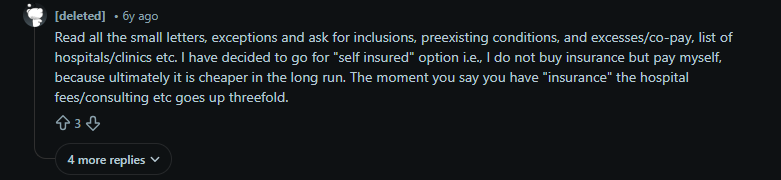
There is a simple truth many people realise only later. The best time to buy health insurance is when you feel perfectly healthy. Younger applicants usually receive lower premiums because insurers view them as lower risk. Medical histories remain uncomplicated and policy approvals happen faster.
| Advantage | Explanation |
| Lower premiums | Younger applicants pay smaller premiums |
| Fewer medical tests | Health history is uncomplicated |
| Waiting periods start earlier | Full coverage activates sooner |
| Long-term benefits | No claim bonuses accumulate |
Healthcare expenses in India still rely heavily on out-of-pocket payments. That reality alone makes insurance an important financial safeguard.
Let me ask a simple question.
Would you rather buy insurance while you are healthy, or after a doctor has already identified a medical issue? Most people answer that instantly. Health insurance rarely feels exciting. It does not deliver the visible returns of investments or the emotional satisfaction of buying property. It simply exists quietly in the background.
Until the moment it becomes extremely important. Health insurance cannot prevent illness. That uncertainty remains part of life. What it can do is protect financial stability when unexpected medical expenses appear.
At Finanjo, we believe the first health insurance policy someone buys often becomes the starting point of long-term financial resilience. Taking the time to understand these details early can make that protection far stronger.
At Finanjo, we often notice something about the first few years of someone’s career. Financial decisions rarely arrive as part of a grand and organised plan. They appear gradually. One small choice at a time – be it that SIP, health insurance or EMI.
Rohan’s story reflects that pattern.
He had recently moved to Hyderabad for his second job. The change was not dramatic. Just the quiet upgrades that come with a slightly better salary. A cleaner apartment. Weekend dinners that did not require constant budgeting. One colleague even convinced him to start a SIP during a lunch break.
Health insurance came up once during HR onboarding. A quick slide buried inside a long presentation. He nodded along like everyone else in the room and forgot about it.
A few weeks later, during a normal office conversation, a teammate mentioned spending almost ₹2 lakh after a minor accident. Nothing extreme. No complicated surgery. Just hospital observation, tests, and treatment for a few days.
The number stayed in his head longer than expected.
It was not catastrophic. But it was not small either. Something about that conversation quietly changed how he thought about medical expenses. Medical costs rarely follow the timelines people imagine for themselves.
Among young professionals in India, health insurance occupies a strange space. Everyone agrees it matters. Yet very few people treat it as something urgent.
The early phase of a career has its own distractions. The first meaningful salary. Rent in Bengaluru or Hyderabad. A weekend trip with friends. Perhaps a mutual fund SIP because someone insisted it was the responsible thing to do.
Insurance usually stays in the background.
Healthcare costs move in the opposite direction. Over the last decade, treatment expenses across private hospitals in India have risen steadily. Medical inflation in the country is often estimated between 12 and 14 percent annually. That is much higher than the inflation most people notice in everyday spending.
According to India’s National Sample Survey, the average hospitalisation cost in private hospitals can exceed ₹31,000 per case. Public hospitals are far cheaper, averaging closer to ₹4,400.
These numbers only tell part of the story. Certain procedures climb far beyond that range. Medical emergencies also rarely arrive in dramatic ways. A routine fever that worsens. A road accident during an ordinary commute. A parent who suddenly needs surgery.
These things appear inside otherwise normal weeks. And the financial impact can surprise even responsible households. Many young earners rely entirely on employer health insurance. For a while, that works perfectly well. Until circumstances change.
Careers today rarely remain tied to one organisation for decades. People switch jobs. Some take sabbaticals. Others move cities or start businesses. Employer health coverage usually ends the moment employment does.
Which explains why personal health insurance becomes relevant much earlier than most people expect. The first policy someone buys often stays with them for decades. That makes the decision worth thinking through carefully.
Before comparing premiums or browsing policy brochures, it helps to pause and ask a simpler question. What exactly does health insurance do?
At its core, it absorbs the financial shock of medical treatment. When hospitalisation becomes necessary, the insurer pays eligible costs depending on the policy structure.
Most comprehensive health insurance policies in India cover several categories of medical expenses.
| Medical Expense Category | What It Typically Covers |
| Hospital room charges | Shared room, private room, ICU |
| Doctor consultation fees | Specialist consultations and treatment |
| Surgical procedures | Operation theatre charges and surgeon fees |
| Diagnostic tests | Blood tests, imaging scans, pathology |
| Medicines | Drugs administered during hospitalisation |
Without insurance, these costs come directly from personal savings. Hospital bills escalate faster than most people expect.
Studies on healthcare spending in India repeatedly show that patients in private hospitals still pay a large portion of expenses out of pocket. Even when certain insurance schemes exist. For someone still building an emergency fund, one hospitalisation can disrupt financial stability for years.
Insurance reshapes that risk. Instead of unpredictable medical bills, individuals pay a predictable annual premium. Once people understand this, another question usually appears. If companies already provide health insurance, why buy another policy?
Employer health insurance often feels like a complete solution.
For many professionals, it is the first time they encounter health coverage. The company includes it as part of employee benefits and everything appears straightforward at first glance.
The limitation only becomes visible after a closer look. Employer policies remain active only during employment. Change jobs, take a career break, or leave corporate work entirely and the coverage disappears.
Modern careers move quickly. Job transitions every three or four years are common, especially in technology and consulting sectors. Which raises a practical question. What happens to health coverage during those transitions?
Personal health insurance fills that gap.
| Factor | Employer Health Policy | Personal Health Policy |
| Coverage duration | Valid only during employment | Independent of employment |
| Policy design | Fixed by employer | Customisable coverage |
| Portability | Ends with job change | Lifetime renewability |
| Dependents coverage | Often limited | Flexible family coverage |
Another detail often goes unnoticed. Coverage size.
Many employer policies offer coverage between ₹3 lakh and ₹5 lakh. In large metropolitan hospitals, that amount may only cover part of a major procedure. Personal health insurance provides continuity and control.
Once that becomes clear, a second decision appears. How much coverage should someone actually choose?
First-time buyers often gravitate toward the lowest coverage option available. The reasoning seems sensible. Lower coverage means a lower premium.
Initially, that feels efficient. The limitation only becomes visible during medical emergencies.
Healthcare costs vary widely across cities. Treatments in metropolitan areas such as Mumbai, Delhi, Bengaluru, or Hyderabad tend to be significantly more expensive than those in smaller towns. Financial planners often recommend the following coverage ranges.
| City Category | Suggested Minimum Coverage |
| Tier 1 cities | ₹10-15 lakh |
| Tier 2 cities | ₹7-10 lakh |
| Smaller cities | ₹5-7 lakh |
Meanwhile, household medical spending in India still relies heavily on personal funds. Surveys show a large portion of hospitalisation costs are paid directly by families. Adequate coverage reduces that exposure. But the coverage amount alone does not determine whether claims will proceed smoothly.
Another practical detail becomes important. Hospital networks.
One of the most useful features of health insurance is cashless hospitalisation.
Instead of paying hospital bills upfront and seeking reimbursement later, the insurer settles approved expenses directly with the hospital. It sounds simple. But it depends entirely on hospital networks.
Cashless treatment works only at hospitals included in the insurer’s network. During emergencies, that detail becomes crucial.
| Network Factor | Why It Matters |
| Number of hospitals | Larger networks provide more treatment options |
| Hospitals in your city | Faster access during emergencies |
| Quality of hospitals | Access to reliable healthcare facilities |
| Claim processing | Faster admission approvals |
Insurers with extensive hospital networks provide greater flexibility, especially for professionals who relocate frequently. Yet hospital networks are only part of the policy mechanics. Another component quietly influences coverage. Waiting periods.
Health insurance policies include waiting periods for certain conditions. These are timeframes during which specific treatments are not covered immediately after purchasing the policy. The purpose is simple. Without waiting periods, people could buy insurance only after falling sick.
Typical waiting periods include the following.
| Waiting Period Type | Typical Duration |
| Initial waiting period | 30 days |
| Pre-existing disease waiting period | 2-4 years |
| Specific illness waiting period | 1-2 years |
| Maternity coverage waiting period | 2-4 years |
Buying insurance early allows these waiting periods to pass quietly in the background. By the time treatment becomes necessary, the coverage is already active. Coverage timing is not the only technical element inside a policy. Some policies include limits that influence how much insurers actually pay.
Certain health insurance policies contain sub-limits for specific expenses. These restrictions determine how much the insurer will reimburse for different components of treatment.
| Policy Feature | Possible Impact |
| Room rent limit | Restricts daily accommodation cost |
| Surgery limit | Caps payout for procedures |
| Diagnostic limits | Limits reimbursement for tests |
| Medicine limits | Restricts pharmacy expenses |
Consider a simple example.
If a policy allows room rent of ₹5,000 per day but the hospital charges ₹8,000, the difference must be paid by the patient. In some cases, other treatment costs are reduced proportionally as well. These details rarely attract attention during purchase. Yet they matter considerably during hospitalisation.
Which is why evaluating the insurer itself becomes equally important.
Insurance ultimately depends on reliability.
When policyholders file claims, they expect the insurer to process them efficiently. One widely referenced metric in India is the claim settlement ratio.
| Claim Settlement Ratio | Interpretation |
| Above 98 percent | Strong claim performance |
| 95-98 percent | Reliable insurer |
| 90-95 percent | Acceptable performance |
| Below 90 percent | Requires careful evaluation |
Healthcare utilisation in India has been rising steadily and claim volumes have increased accordingly. That trend makes insurer credibility even more relevant.
Once the insurer appears trustworthy, buyers often begin considering another aspect. Who else should be covered?
Health insurance policies can be structured as individual plans or family floater plans.
Individual policies assign separate coverage to each insured person. Family floater plans provide a shared coverage pool. For younger families, floater plans often reduce overall premiums.
| Feature | Individual Plan | Family Floater |
| Coverage structure | Separate coverage per person | Shared coverage pool |
| Premium cost | Higher combined premium | Lower overall premium |
| Claim usage | Independent claims | Shared coverage |
| Ideal users | Older individuals | Younger families |
A ₹10 lakh floater policy allows any insured family member to use the coverage when necessary. It simplifies administration and often reduces costs. Over time, additional policy benefits can strengthen coverage even further.
One example is the No Claim Bonus.
Many insurers reward policyholders who do not make claims during a policy year. This reward is called the No Claim Bonus. Instead of offering cash, insurers increase the sum insured without raising premiums.
| Policy Year | Base Coverage | Coverage After NCB |
| Year 1 | ₹10 lakh | ₹10 lakh |
| Year 2 | ₹10 lakh | ₹12 lakh |
| Year 3 | ₹10 lakh | ₹14 lakh |
| Year 4 | ₹10 lakh | ₹16 lakh |
Over several years, this feature can significantly expand financial protection. For individuals who remain healthy, coverage gradually grows without increasing cost.
Which brings us to the final consideration. Timing.
There is a simple truth many people realise only later. The best time to buy health insurance is when you feel perfectly healthy. Younger applicants usually receive lower premiums because insurers view them as lower risk. Medical histories remain uncomplicated and policy approvals happen faster.
| Advantage | Explanation |
| Lower premiums | Younger applicants pay smaller premiums |
| Fewer medical tests | Health history is uncomplicated |
| Waiting periods start earlier | Full coverage activates sooner |
| Long-term benefits | No claim bonuses accumulate |
Healthcare expenses in India still rely heavily on out-of-pocket payments. That reality alone makes insurance an important financial safeguard.
Let me ask a simple question.
Would you rather buy insurance while you are healthy, or after a doctor has already identified a medical issue? Most people answer that instantly. Health insurance rarely feels exciting. It does not deliver the visible returns of investments or the emotional satisfaction of buying property. It simply exists quietly in the background.
Until the moment it becomes extremely important. Health insurance cannot prevent illness. That uncertainty remains part of life. What it can do is protect financial stability when unexpected medical expenses appear.
At Finanjo, we believe the first health insurance policy someone buys often becomes the starting point of long-term financial resilience. Taking the time to understand these details early can make that protection far stronger.
A contributor to the Finanjo blog, where I share insightful and easy-to-understand content focused on educating readers about finance. With a clear and approachable writing style, I simplify complex topics to make them more understandable.
A contributor to the Finanjo blog, where I share insightful and easy-to-understand content focused on educating readers about finance. With a clear and approachable writing style, I simplify complex topics to make them more understandable.

