

“What do you mean you do not have term insurance?”
Buying your first term insurance policy often feels like one of those financial decisions everyone recommends, but very few people explain clearly.
A colleague casually mentions it during a lunch break. A financial influencer online says it should be the “first step in financial planning.” A bank representative suggests it when you visit the branch for something completely unrelated.
Because the advice is so common, many people end up purchasing a policy quickly, choosing a coverage number that sounds reasonable and moving on. But a term insurance policy is not just another financial product. It is a long-term commitment designed to protect the income that supports your family’s future.
The good news is that term insurance itself is simple. What matters more is how thoughtfully you approach the first purchase.
The truth is, youngsters today are not exactly known for being disciplined with money. Most people are figuring things out as they go.
That is where Finanjo steps in.
At Finanjo, personal finance experts break down what actually matters, starting with the basics. Term insurance is one of the simplest and most important financial decisions you will make.
But before you buy your first policy, here are ten things worth thinking through carefully.
Insurance brochures often wrap simple ideas in complicated language. Pages filled with Insurance brochures love making simple things sound complicated. They use big words, polished phrases, and long explanations that sound important but rarely make things clearer.
So remove all of that for a moment.
Term insurance does one job. It replaces income.
Imagine this. You are 25 and earning well, maybe ₹10-12 lakh a year. That money quietly runs a lot of things. Rent gets paid. Parents receive support. Future EMIs are not far away. Plans slowly begin forming in the background.
Now imagine that income suddenly stops. Not because of a job switch or a bad market cycle, but because something serious happens.
This is exactly where term insurance steps in. If the insured person passes away during the policy period, the insurance company pays a large lump sum to the nominee, usually the family. That payout helps the household stay financially stable. Loans can be cleared, everyday expenses can continue, and long-term plans like education do not suddenly collapse.
In simple terms, the policy replaces the income that disappeared. That is the entire purpose of the product.
There is no hidden investment growing in the background. Most term plans do not offer maturity payouts. If the policyholder survives the policy term, the policy simply ends.
This is also the moment when many people react the same way. They ask, “So if nothing happens, the money is gone?”
Yes. And that is completely normal.
Health insurance works the same way. Car insurance works the same way. Nobody buys car insurance expecting an accident. But the financial damage would be huge if it happened, so people pay for protection.
Term insurance follows that exact logic. The policy is not really meant for the person buying it. It exists for the people whose financial stability depends on that person’s income.
Once that idea clicks, the entire concept of term insurance becomes very easy to understand.
One question that rarely appears in financial discussions is surprisingly simple: Do you actually need term insurance right now?
The answer depends entirely on context. Someone who has just started working at twenty-three, sharing an apartment in Pune and splitting rent with friends, may not yet have anyone financially dependent on their income. In that stage of life, the urgency of buying a large policy is relatively low. Purchasing early can still help lock in lower premiums, but the fundamental purpose of insurance remains protecting dependents.
Life, however, tends to change quickly.
Within a few years, responsibilities begin to appear. Parents may enter retirement. A spouse may begin sharing financial commitments. A home loan may quietly reshape monthly budgets. Sometimes the shift happens gradually. At other times, it arrives almost overnight.
When other people depend on your income, insurance stops being theoretical and becomes practical.
| Life Situation | Insurance Need Level | Reason |
| Single with no dependents | Low to Moderate | Premium locking and early planning |
| Married with a dependent spouse | High | Household income becomes essential |
| Supporting retired parents | High | Family finances depend on your earnings |
| Large home loan | Very High | Loan liability must be protected |
| Children dependent on income | Very High | Long-term financial security required |
Many professionals in cities like Gurugram, Bengaluru, and Pune postpone insurance because everything feels stable in the early years of their career. Yet responsibilities have a way of arriving quickly. A home loan approval appears. Parents stop working. A child is expected.
At that stage, the importance of income protection becomes immediately clear.
In India, people often choose insurance coverage amounts in a surprisingly casual way. Someone suggests ₹1 crore because it sounds like a responsible number. Another person mentions ₹50 lakh because that worked for them. After hearing these figures repeatedly, they start sounding like universal benchmarks.
But they rarely are.
A common rule of thumb suggests buying coverage equal to ten to fifteen times annual income. This rule offers a quick starting point and prevents people from choosing extremely low coverage. Still, real financial lives rarely follow neat formulas.
Two individuals earning ₹12 lakh a year can live in very different financial realities. One may have minimal responsibilities, while the other might support parents, repay a housing loan, and prepare for future education costs.
That is why a better approach is to think in terms of financial exposure instead of income multiples. The question is simple. If that income suddenly stops, what financial responsibilities would still remain?
A simple calculation often brings much more clarity. Break the responsibility into a few parts.
Start by adding any major liabilities such as home loans, education loans, or personal debt.
Example calculation:
Home loan remaining: ₹45 lakh
Education loan: ₹5 lakh
Total liabilities = ₹50 lakh
The insurance payout should at least clear these completely, so the family does not inherit the debt.
Estimate how much the household spends annually and multiply it by the number of years you want the family to remain financially stable.
Example calculation:
Annual household expenses: ₹6 lakh
Coverage for 15 years: ₹6 lakh x 15
Total required = ₹90 lakh
This ensures everyday expenses like groceries, rent, utilities, school fees, and healthcare remain manageable.
Consider major expenses that may arise in the future, especially if children are part of the picture.
Example calculation:
Children’s higher education fund: ₹25 lakh
Other family commitments: ₹10 lakh
Total future commitments = ₹35 lakh
Putting it together
Liabilities: ₹50 lakh
Living expenses cushion: ₹90 lakh
Future commitments: ₹35 lakh
Total coverage requirement = ₹1.75 crore
Once people run through a simple calculation like this, the coverage amount stops feeling random. It starts reflecting the actual financial risks the household faces, which is exactly what insurance is meant to protect against.
Insurance ultimately rests on a promise. It is a commitment that a company will honour a financial claim many years in the future. Because of this, the credibility and reliability of the insurer deserve careful attention.
One widely used metric in India is the claim settlement ratio. It represents the percentage of claims an insurance company settles compared to the total claims it receives within a year.
| Rank | Company Name | CSR (FY 2022-23) | CSR (FY 2023-24) | CSR (FY 2024-25) | CSR (FY 2022-2025) |
| 1 | Axis Max Life Insurance | 99.51% | 99.65% | 99.70% | 99.62% |
| 2 | Bandhan Life Insurance (Formerly Aegon Life Insurance) | 99.37% | 99.66% | 99.73% | 99.59% |
| 3 | HDFC Life Insurance | 99.41% | 99.54% | 99.71% | 99.55% |
| 4 | PNB MetLife India Insurance | 99.09% | 99.20% | 99.57% | 99.29% |
| 5 | Canara HSBC Life Insurance | 99.10% | 99.31% | – | – |
Several large insurers in India consistently report claim settlement ratios above 95 percent according to data published by the Insurance Regulatory and Development Authority of India (IRDAI).
However, a single year of data rarely tells the entire story. Looking at performance across several years usually provides a clearer picture. Financial strength, customer experience, and the company’s reputation also matter.
When a claim arises, families dealing with loss should not also face unnecessary complications.
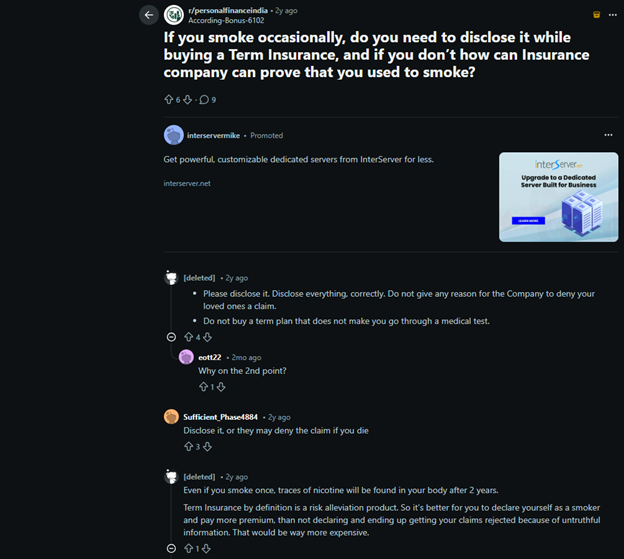
Insurance forms have a funny way of making people behave slightly differently from real life.
Someone who smokes occasionally suddenly becomes a “non-smoker” on the application. Alcohol consumption becomes “rare.” A surgery from five years ago feels too small to mention. People convince themselves that it probably does not matter.
The thinking is simple. If the insurer knows less, maybe the premium stays lower. Maybe the questions stop sooner.
But this is where many people misunderstand how insurance works.
When a policy claim actually happens, the insurer does not just process the payout automatically. They go back and review the original application. Medical records get checked. Hospital documents are examined. Doctors’ notes sometimes get reviewed as well.
If something important was not disclosed during the application, the insurer can question the claim. In some cases, they may even reject it.
And the worst part is when this usually happens. It does not happen during a normal day when paperwork feels manageable. It happens when a family is already dealing with loss and expects the policy to help them financially.
That is why honesty on the application form matters much more than people assume.
Most insurers ask a similar set of questions before approving a policy. They are simply trying to understand the applicant’s health and lifestyle.
For larger coverage amounts, insurers often conduct their own medical tests as well. A basic health check, blood tests, or other screenings may be part of the process.
So, trying to hide things rarely helps anyway.
It is far better to answer honestly from the start. When the policy is issued with complete and accurate information, there are far fewer chances of problems later.
And years down the line, when the policy is meant to support the family, that clarity makes a huge difference.
Policy duration is sometimes chosen purely to reduce premiums. A shorter term lowers the cost and initially feels like a practical decision.
But shorter coverage can create dangerous gaps.
Imagine someone purchasing insurance at age twenty-eight and selecting a twenty-year term. The premium looks attractive, and payments feel manageable. Yet the policy expires at forty-eight, a stage when many people still have children studying, housing loans running, and retirement savings still developing.
Protection disappears exactly when it may still be needed.
| Age at Purchase | Suggested Policy Term | Coverage Until |
| 25 | 35 years | Around age 60 |
| 30 | 30-35 years | Around age 60-65 |
| 35 | 25-30 years | Around age 60-65 |
| 40 | 20-25 years | Around age 60-65 |
The idea is simple. Insurance should cover the years during which income supports dependents and liabilities. Once major financial responsibilities are completed and retirement approaches, the need for large life cover typically declines.
Term insurance policies often include optional add-ons called riders. These extensions provide protection against specific risks and can be helpful when chosen thoughtfully.
Common riders include critical illness coverage, accidental death benefits, disability protection, and waiver of premium provisions.
Each rider increases the premium slightly. Individually, the increase may appear small, but combining several riders can gradually push the total premium much higher.
The decision should not be automatic. A useful question to ask is whether the rider covers a risk that is not already protected elsewhere.
For instance, someone with comprehensive health insurance may not require a large critical illness rider within their term policy. On the other hand, a waiver of premium rider can be extremely valuable if an illness or disability prevents the insured person from continuing premium payments.
The right combination depends entirely on individual financial planning rather than a standard checklist.
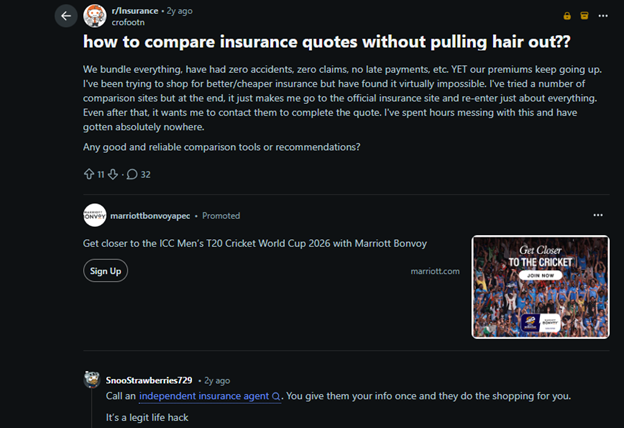
We do not want you pulling your hair trying to understand term insurance comparisons, so here is the simple version.
Term insurance is actually one of the easiest financial products to compare. Most insurers publish their policy features online, and comparison platforms allow buyers to check premiums, coverage limits, and claim records within minutes.
Yet many people skip this step.
The decision often happens quickly. Someone finds a policy that looks affordable, selects a coverage amount, and moves ahead without checking a few other options.
But premiums for the same coverage can vary across insurers. Sometimes the difference looks small at first. Over a policy period of twenty or thirty years, even a slightly higher premium can add up to a noticeable amount.
That is why spending a little time comparing options usually makes sense before making the final decision.
A useful comparison usually includes a few practical details:
Online policies are often slightly cheaper because distribution costs are lower and there are fewer intermediary commissions. That does not automatically make them better, but it is worth evaluating before making the final decision.
A term insurance policy usually stays with a person for a very long time. Someone who buys a policy at thirty may continue paying premiums until sixty or even sixty-five. That is three decades of payments.
And life rarely stays predictable for that long.
Careers change. Salaries go up, but sometimes they slow down for a while. People switch cities, change industries, start businesses, or take a break from work. Financial life moves around more than most people expect in their twenties.
Because of this, choosing a policy only because it has the lowest premium can be a little misleading.
A cheaper premium looks great today, especially when the difference between the two policies feels noticeable. But the real question is whether that premium will still feel comfortable ten or fifteen years later when life looks different.
Insurance policies lapse more often than people realise. When someone stops paying premiums, the policy can become inactive. Restarting it later is not always simple. The insurer may ask for new medical tests or apply additional conditions before reactivating the coverage.
This is why stability matters more than saving a few hundred rupees right now.
The premium should feel manageable, not just today, but during the years when income may fluctuate or priorities change. In the long run, consistency matters far more than a small saving at the beginning.
Insurance planning rarely ends with the first policy purchase. Responsibilities expand gradually, and financial exposure grows with them.
Marriage introduces shared financial obligations. A home loan creates a large liability. The arrival of children adds commitments that stretch decades into the future.
Each of these changes may require revisiting the amount of protection in place.
| Life Event | Why Coverage Should Be Reviewed |
| Marriage | A spouse may depend on your income |
| Home loan | A new financial liability appears |
| Birth of a child | Long-term education and living costs |
| Career growth | Higher income requires protection |
| Starting a business | Financial risk increases |
Rather than replacing the original policy, many individuals simply add new policies over time. One policy early in the career, another after purchasing a home, and perhaps a third once children arrive.
The structure may look slightly layered, but it allows protection to grow alongside real-world responsibilities.
Term insurance is an unusual financial product. People buy it hoping it never becomes necessary. Premiums get paid quietly for years while life moves on, and the policy stays somewhere in the background.
Then one day, during circumstances nobody ever plans for, that document suddenly becomes extremely important. The payout becomes the financial bridge that helps a household stay stable when income disappears.
Over time, both kinds of outcomes appear. Some claims genuinely help families stay afloat during very difficult moments. In other cases, the coverage turns out to be too small, the application had missing information, or the policy had quietly lapsed years earlier.
That is why the first policy deserves a little more thought than it usually gets.
So if you are that 25-year-old earning around ₹12 lakh a year and trying to figure out personal finance while managing rent, SIPs, and everyday expenses, this decision matters more than it may seem.
And if insurance still feels confusing, Finanjo is here to help. Our personal finance experts break down everything you need to know so you can choose the right term insurance policy with confidence.
“What do you mean you do not have term insurance?”
Buying your first term insurance policy often feels like one of those financial decisions everyone recommends, but very few people explain clearly.
A colleague casually mentions it during a lunch break. A financial influencer online says it should be the “first step in financial planning.” A bank representative suggests it when you visit the branch for something completely unrelated.
Because the advice is so common, many people end up purchasing a policy quickly, choosing a coverage number that sounds reasonable and moving on. But a term insurance policy is not just another financial product. It is a long-term commitment designed to protect the income that supports your family’s future.
The good news is that term insurance itself is simple. What matters more is how thoughtfully you approach the first purchase.
The truth is, youngsters today are not exactly known for being disciplined with money. Most people are figuring things out as they go.
That is where Finanjo steps in.
At Finanjo, personal finance experts break down what actually matters, starting with the basics. Term insurance is one of the simplest and most important financial decisions you will make.
But before you buy your first policy, here are ten things worth thinking through carefully.
Insurance brochures often wrap simple ideas in complicated language. Pages filled with Insurance brochures love making simple things sound complicated. They use big words, polished phrases, and long explanations that sound important but rarely make things clearer.
So remove all of that for a moment.
Term insurance does one job. It replaces income.
Imagine this. You are 25 and earning well, maybe ₹10-12 lakh a year. That money quietly runs a lot of things. Rent gets paid. Parents receive support. Future EMIs are not far away. Plans slowly begin forming in the background.
Now imagine that income suddenly stops. Not because of a job switch or a bad market cycle, but because something serious happens.
This is exactly where term insurance steps in. If the insured person passes away during the policy period, the insurance company pays a large lump sum to the nominee, usually the family. That payout helps the household stay financially stable. Loans can be cleared, everyday expenses can continue, and long-term plans like education do not suddenly collapse.
In simple terms, the policy replaces the income that disappeared. That is the entire purpose of the product.
There is no hidden investment growing in the background. Most term plans do not offer maturity payouts. If the policyholder survives the policy term, the policy simply ends.
This is also the moment when many people react the same way. They ask, “So if nothing happens, the money is gone?”
Yes. And that is completely normal.
Health insurance works the same way. Car insurance works the same way. Nobody buys car insurance expecting an accident. But the financial damage would be huge if it happened, so people pay for protection.
Term insurance follows that exact logic. The policy is not really meant for the person buying it. It exists for the people whose financial stability depends on that person’s income.
Once that idea clicks, the entire concept of term insurance becomes very easy to understand.
One question that rarely appears in financial discussions is surprisingly simple: Do you actually need term insurance right now?
The answer depends entirely on context. Someone who has just started working at twenty-three, sharing an apartment in Pune and splitting rent with friends, may not yet have anyone financially dependent on their income. In that stage of life, the urgency of buying a large policy is relatively low. Purchasing early can still help lock in lower premiums, but the fundamental purpose of insurance remains protecting dependents.
Life, however, tends to change quickly.
Within a few years, responsibilities begin to appear. Parents may enter retirement. A spouse may begin sharing financial commitments. A home loan may quietly reshape monthly budgets. Sometimes the shift happens gradually. At other times, it arrives almost overnight.
When other people depend on your income, insurance stops being theoretical and becomes practical.
| Life Situation | Insurance Need Level | Reason |
| Single with no dependents | Low to Moderate | Premium locking and early planning |
| Married with a dependent spouse | High | Household income becomes essential |
| Supporting retired parents | High | Family finances depend on your earnings |
| Large home loan | Very High | Loan liability must be protected |
| Children dependent on income | Very High | Long-term financial security required |
Many professionals in cities like Gurugram, Bengaluru, and Pune postpone insurance because everything feels stable in the early years of their career. Yet responsibilities have a way of arriving quickly. A home loan approval appears. Parents stop working. A child is expected.
At that stage, the importance of income protection becomes immediately clear.
In India, people often choose insurance coverage amounts in a surprisingly casual way. Someone suggests ₹1 crore because it sounds like a responsible number. Another person mentions ₹50 lakh because that worked for them. After hearing these figures repeatedly, they start sounding like universal benchmarks.
But they rarely are.
A common rule of thumb suggests buying coverage equal to ten to fifteen times annual income. This rule offers a quick starting point and prevents people from choosing extremely low coverage. Still, real financial lives rarely follow neat formulas.
Two individuals earning ₹12 lakh a year can live in very different financial realities. One may have minimal responsibilities, while the other might support parents, repay a housing loan, and prepare for future education costs.
That is why a better approach is to think in terms of financial exposure instead of income multiples. The question is simple. If that income suddenly stops, what financial responsibilities would still remain?
A simple calculation often brings much more clarity. Break the responsibility into a few parts.
Start by adding any major liabilities such as home loans, education loans, or personal debt.
Example calculation:
Home loan remaining: ₹45 lakh
Education loan: ₹5 lakh
Total liabilities = ₹50 lakh
The insurance payout should at least clear these completely, so the family does not inherit the debt.
Estimate how much the household spends annually and multiply it by the number of years you want the family to remain financially stable.
Example calculation:
Annual household expenses: ₹6 lakh
Coverage for 15 years: ₹6 lakh x 15
Total required = ₹90 lakh
This ensures everyday expenses like groceries, rent, utilities, school fees, and healthcare remain manageable.
Consider major expenses that may arise in the future, especially if children are part of the picture.
Example calculation:
Children’s higher education fund: ₹25 lakh
Other family commitments: ₹10 lakh
Total future commitments = ₹35 lakh
Putting it together
Liabilities: ₹50 lakh
Living expenses cushion: ₹90 lakh
Future commitments: ₹35 lakh
Total coverage requirement = ₹1.75 crore
Once people run through a simple calculation like this, the coverage amount stops feeling random. It starts reflecting the actual financial risks the household faces, which is exactly what insurance is meant to protect against.
Insurance ultimately rests on a promise. It is a commitment that a company will honour a financial claim many years in the future. Because of this, the credibility and reliability of the insurer deserve careful attention.
One widely used metric in India is the claim settlement ratio. It represents the percentage of claims an insurance company settles compared to the total claims it receives within a year.
| Rank | Company Name | CSR (FY 2022-23) | CSR (FY 2023-24) | CSR (FY 2024-25) | CSR (FY 2022-2025) |
| 1 | Axis Max Life Insurance | 99.51% | 99.65% | 99.70% | 99.62% |
| 2 | Bandhan Life Insurance (Formerly Aegon Life Insurance) | 99.37% | 99.66% | 99.73% | 99.59% |
| 3 | HDFC Life Insurance | 99.41% | 99.54% | 99.71% | 99.55% |
| 4 | PNB MetLife India Insurance | 99.09% | 99.20% | 99.57% | 99.29% |
| 5 | Canara HSBC Life Insurance | 99.10% | 99.31% | – | – |
Several large insurers in India consistently report claim settlement ratios above 95 percent according to data published by the Insurance Regulatory and Development Authority of India (IRDAI).
However, a single year of data rarely tells the entire story. Looking at performance across several years usually provides a clearer picture. Financial strength, customer experience, and the company’s reputation also matter.
When a claim arises, families dealing with loss should not also face unnecessary complications.
Insurance forms have a funny way of making people behave slightly differently from real life.
Someone who smokes occasionally suddenly becomes a “non-smoker” on the application. Alcohol consumption becomes “rare.” A surgery from five years ago feels too small to mention. People convince themselves that it probably does not matter.
The thinking is simple. If the insurer knows less, maybe the premium stays lower. Maybe the questions stop sooner.
But this is where many people misunderstand how insurance works.
When a policy claim actually happens, the insurer does not just process the payout automatically. They go back and review the original application. Medical records get checked. Hospital documents are examined. Doctors’ notes sometimes get reviewed as well.
If something important was not disclosed during the application, the insurer can question the claim. In some cases, they may even reject it.
And the worst part is when this usually happens. It does not happen during a normal day when paperwork feels manageable. It happens when a family is already dealing with loss and expects the policy to help them financially.
That is why honesty on the application form matters much more than people assume.
Most insurers ask a similar set of questions before approving a policy. They are simply trying to understand the applicant’s health and lifestyle.
For larger coverage amounts, insurers often conduct their own medical tests as well. A basic health check, blood tests, or other screenings may be part of the process.
So, trying to hide things rarely helps anyway.
It is far better to answer honestly from the start. When the policy is issued with complete and accurate information, there are far fewer chances of problems later.
And years down the line, when the policy is meant to support the family, that clarity makes a huge difference.
Policy duration is sometimes chosen purely to reduce premiums. A shorter term lowers the cost and initially feels like a practical decision.
But shorter coverage can create dangerous gaps.
Imagine someone purchasing insurance at age twenty-eight and selecting a twenty-year term. The premium looks attractive, and payments feel manageable. Yet the policy expires at forty-eight, a stage when many people still have children studying, housing loans running, and retirement savings still developing.
Protection disappears exactly when it may still be needed.
| Age at Purchase | Suggested Policy Term | Coverage Until |
| 25 | 35 years | Around age 60 |
| 30 | 30-35 years | Around age 60-65 |
| 35 | 25-30 years | Around age 60-65 |
| 40 | 20-25 years | Around age 60-65 |
The idea is simple. Insurance should cover the years during which income supports dependents and liabilities. Once major financial responsibilities are completed and retirement approaches, the need for large life cover typically declines.
Term insurance policies often include optional add-ons called riders. These extensions provide protection against specific risks and can be helpful when chosen thoughtfully.
Common riders include critical illness coverage, accidental death benefits, disability protection, and waiver of premium provisions.
Each rider increases the premium slightly. Individually, the increase may appear small, but combining several riders can gradually push the total premium much higher.
The decision should not be automatic. A useful question to ask is whether the rider covers a risk that is not already protected elsewhere.
For instance, someone with comprehensive health insurance may not require a large critical illness rider within their term policy. On the other hand, a waiver of premium rider can be extremely valuable if an illness or disability prevents the insured person from continuing premium payments.
The right combination depends entirely on individual financial planning rather than a standard checklist.
We do not want you pulling your hair trying to understand term insurance comparisons, so here is the simple version.
Term insurance is actually one of the easiest financial products to compare. Most insurers publish their policy features online, and comparison platforms allow buyers to check premiums, coverage limits, and claim records within minutes.
Yet many people skip this step.
The decision often happens quickly. Someone finds a policy that looks affordable, selects a coverage amount, and moves ahead without checking a few other options.
But premiums for the same coverage can vary across insurers. Sometimes the difference looks small at first. Over a policy period of twenty or thirty years, even a slightly higher premium can add up to a noticeable amount.
That is why spending a little time comparing options usually makes sense before making the final decision.
A useful comparison usually includes a few practical details:
Online policies are often slightly cheaper because distribution costs are lower and there are fewer intermediary commissions. That does not automatically make them better, but it is worth evaluating before making the final decision.
A term insurance policy usually stays with a person for a very long time. Someone who buys a policy at thirty may continue paying premiums until sixty or even sixty-five. That is three decades of payments.
And life rarely stays predictable for that long.
Careers change. Salaries go up, but sometimes they slow down for a while. People switch cities, change industries, start businesses, or take a break from work. Financial life moves around more than most people expect in their twenties.
Because of this, choosing a policy only because it has the lowest premium can be a little misleading.
A cheaper premium looks great today, especially when the difference between the two policies feels noticeable. But the real question is whether that premium will still feel comfortable ten or fifteen years later when life looks different.
Insurance policies lapse more often than people realise. When someone stops paying premiums, the policy can become inactive. Restarting it later is not always simple. The insurer may ask for new medical tests or apply additional conditions before reactivating the coverage.
This is why stability matters more than saving a few hundred rupees right now.
The premium should feel manageable, not just today, but during the years when income may fluctuate or priorities change. In the long run, consistency matters far more than a small saving at the beginning.
Insurance planning rarely ends with the first policy purchase. Responsibilities expand gradually, and financial exposure grows with them.
Marriage introduces shared financial obligations. A home loan creates a large liability. The arrival of children adds commitments that stretch decades into the future.
Each of these changes may require revisiting the amount of protection in place.
| Life Event | Why Coverage Should Be Reviewed |
| Marriage | A spouse may depend on your income |
| Home loan | A new financial liability appears |
| Birth of a child | Long-term education and living costs |
| Career growth | Higher income requires protection |
| Starting a business | Financial risk increases |
Rather than replacing the original policy, many individuals simply add new policies over time. One policy early in the career, another after purchasing a home, and perhaps a third once children arrive.
The structure may look slightly layered, but it allows protection to grow alongside real-world responsibilities.
Term insurance is an unusual financial product. People buy it hoping it never becomes necessary. Premiums get paid quietly for years while life moves on, and the policy stays somewhere in the background.
Then one day, during circumstances nobody ever plans for, that document suddenly becomes extremely important. The payout becomes the financial bridge that helps a household stay stable when income disappears.
Over time, both kinds of outcomes appear. Some claims genuinely help families stay afloat during very difficult moments. In other cases, the coverage turns out to be too small, the application had missing information, or the policy had quietly lapsed years earlier.
That is why the first policy deserves a little more thought than it usually gets.
So if you are that 25-year-old earning around ₹12 lakh a year and trying to figure out personal finance while managing rent, SIPs, and everyday expenses, this decision matters more than it may seem.
And if insurance still feels confusing, Finanjo is here to help. Our personal finance experts break down everything you need to know so you can choose the right term insurance policy with confidence.
A contributor to the Finanjo blog, where I share insightful and easy-to-understand content focused on educating readers about finance. With a clear and approachable writing style, I simplify complex topics to make them more understandable.
A contributor to the Finanjo blog, where I share insightful and easy-to-understand content focused on educating readers about finance. With a clear and approachable writing style, I simplify complex topics to make them more understandable.

